My practice explores sculptural environments as spaces for storytelling. Working with fabric structures, objects, illustrated figures, moving elements, and fabric dolls, I construct installations that reference architectural forms while loosening their fixed logic. These installations function as theatrical and provisional stages where architecture, landscape, and character interact. Rather than presenting a singular narrative, the works invite viewers to move through layered spatial situations, encountering multiple possible stories shaped by observation, movement, and attention. Across projects such as The Fabric Cube, Post-Play Machines, The Broken Square Fuzzy Wuzzy, and The Family Portrait, architecture becomes a narrative device rather than a stable framework. Influenced by the historical dollhouse—once both a wonder object and a tool for modelling social order—I reinterpret miniature architecture and landscapes as a space where stories unfold. Rooms fragment, walls shift, and fabric dolls emerge as central characters inhabiting these constructed environments. Often inspired by real-life individuals or encounters, the dolls introduce a performative and intimate dimension, allowing everyday narratives to enter the sculptural space.
The Family Portrait (2025)
“……Family means many things to different people. Familie bedeutet für jeden etwas anderes. One thing remains…..there is a tussle between love and hate. Running away from kindreds and yet permanently bound by the bloodline. Solidarität, Liebe, Zusammengehörigkeit … Harmonie, Schutz Nun, was soll ich sagen, es ist ein Kampf zwischen Hass und Liebe……”
-Excerpts from Kezia Ouomoye’s cogitations [7/28/2025]

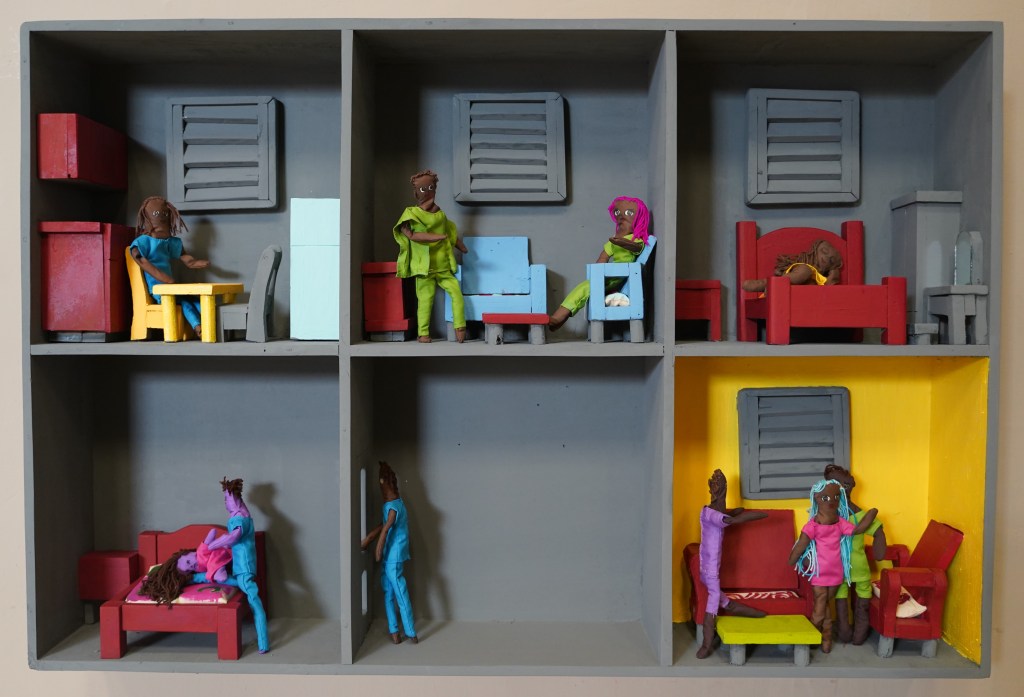
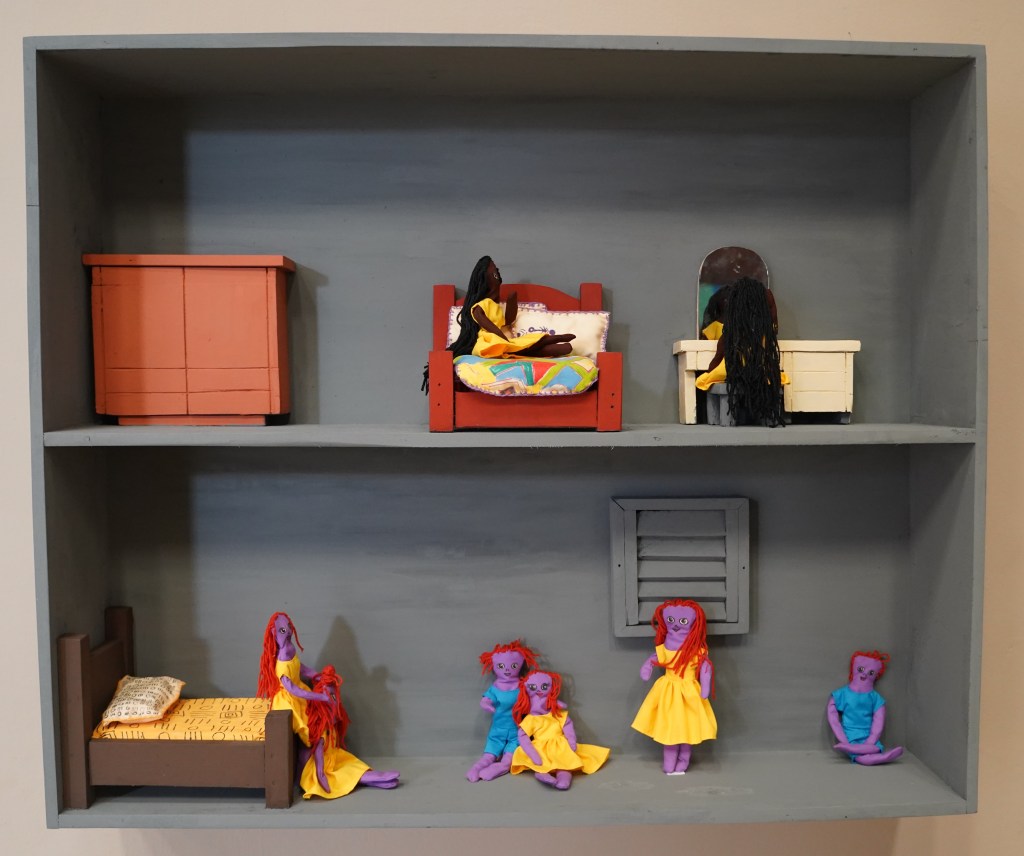
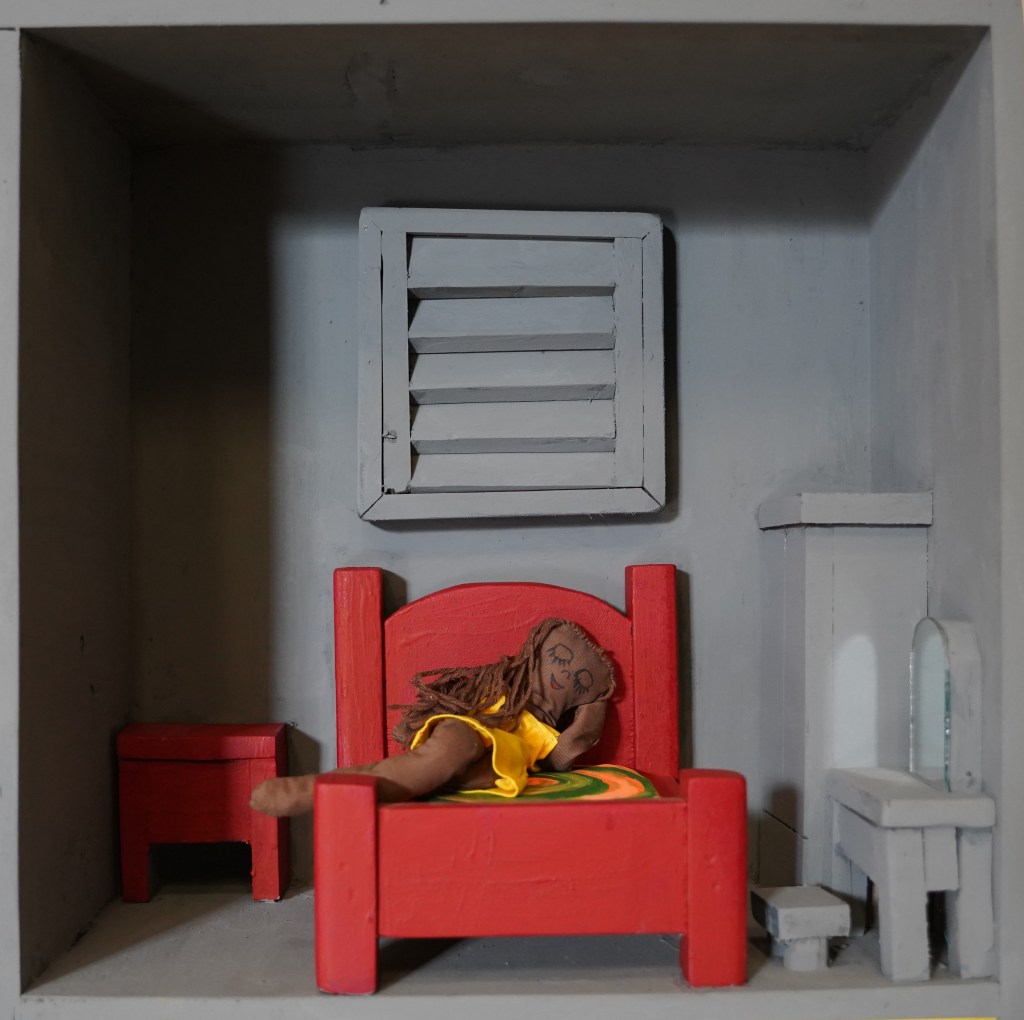
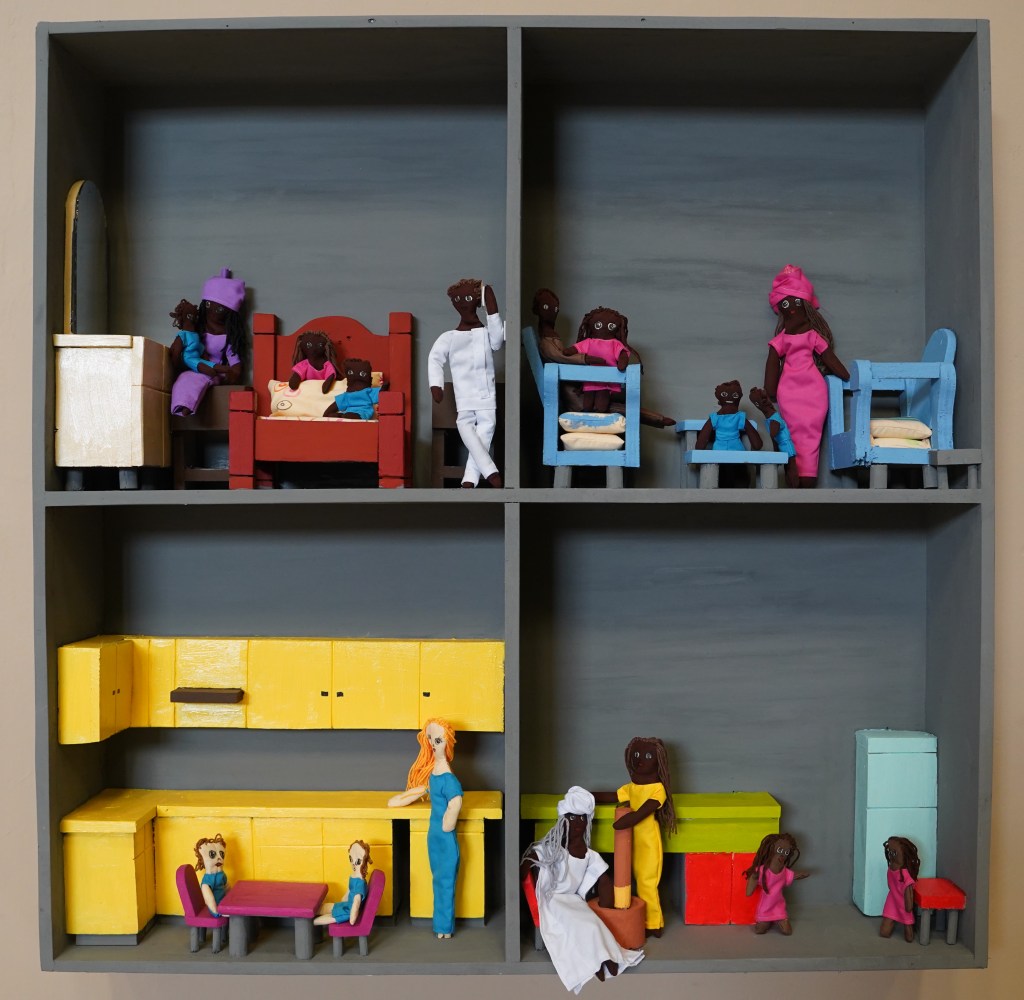
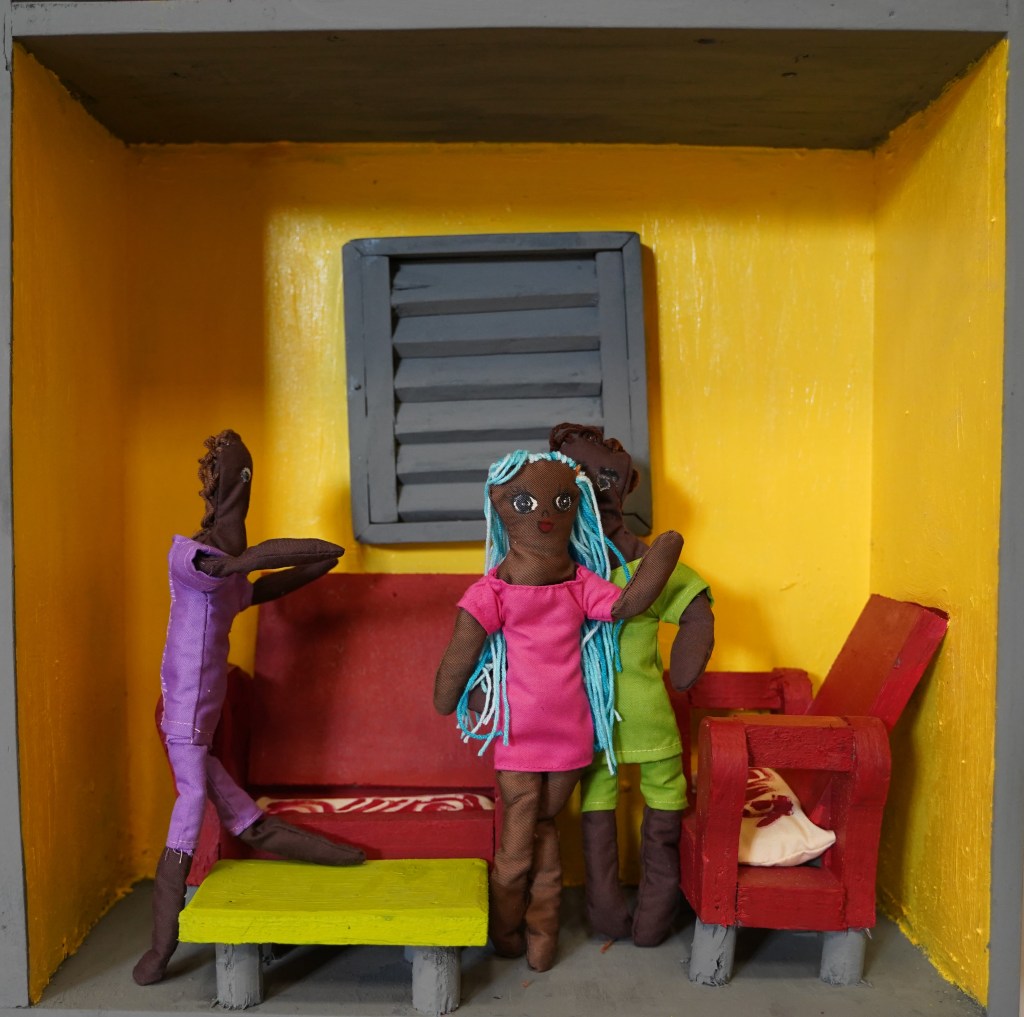
As a participant “of my family,” I perceive the family unit I grew up in as a system of origin which contributed to what shaped my lived experiences and existence today. Am I permanently married to that system? Absolutely not. Growing up, I was dependent on my parents, guardians, siblings, and, like many young adults, gradually broke off from the original family unit to build my own. But the connection with family is still there, and the stories are still very much alive within that system of origin.
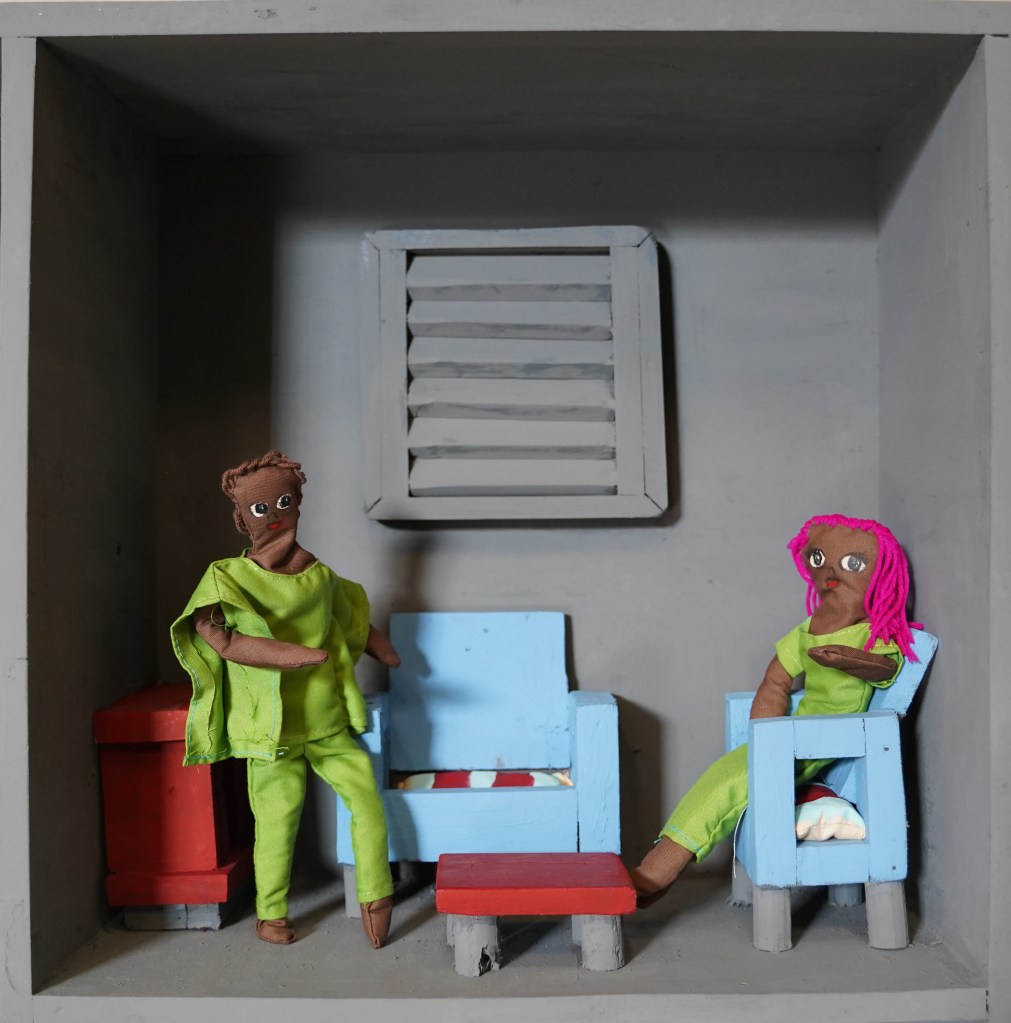
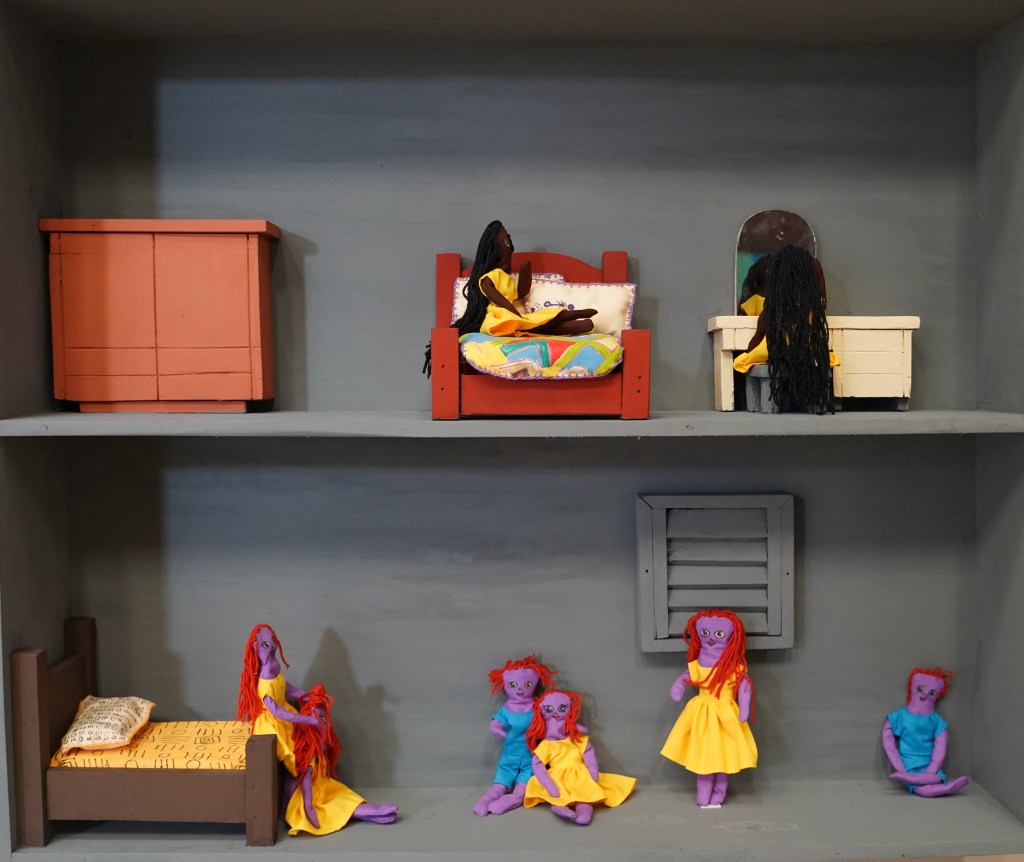
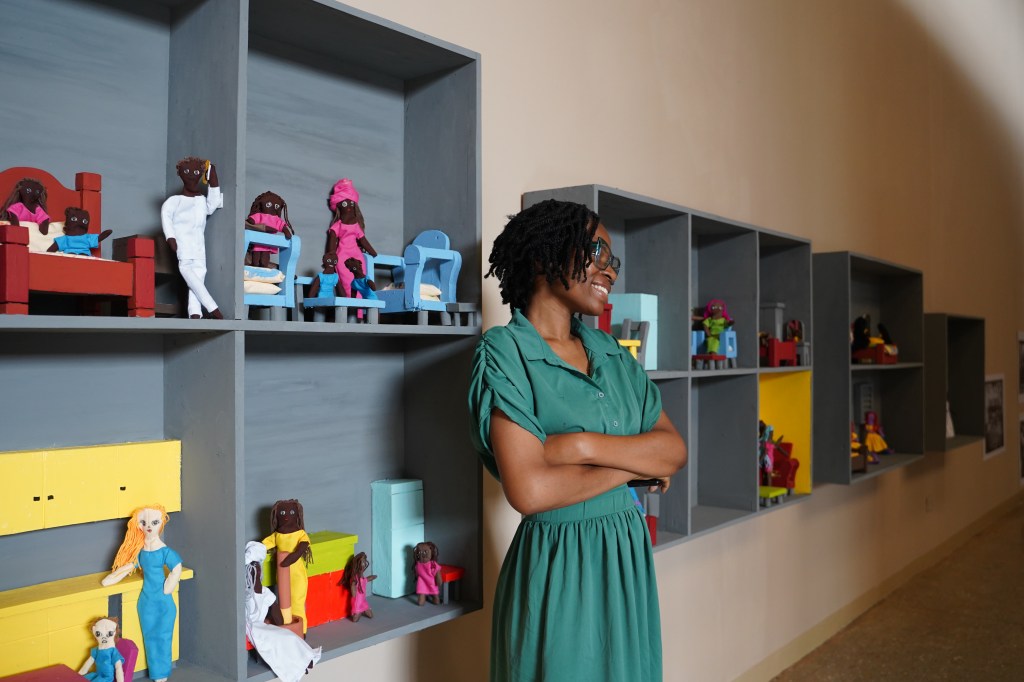
“ The Family Portrait” is embellished with elements of improvisation and theatrics, a narrative structure that unveils characters and plot to fabricate different forms that hope to unlock emotional connections, transmit cultural aspects, traditions and pockets of knowledge. It is a sensory biography written utilizing Sculptural assemblages, constructed objects made of reconfigured wooden parts, positioned as a cultural artefact representing domestic life or traditional craftsmanship.
I define my sculptural forms as storytelling devices, narrative objects through which I coin real-life events and characters from my family. These storytelling devices are inspired by German dollhouses. The dollhouse, with its miniature walls and imagined inhabitants, unfolds as both material and metaphor. In 16th-century Northern Europe, these exquisite constructions were not toys but wonders of craftsmanship—a wunderkammer that mirrored wealth, power, and domestic ideals. Each tiny room whispered of status and discipline, training young girls in the silent script of domestic virtue. Over time, the dollhouse descended from marvel to toy, democratised yet never stripped of meaning, still carrying within its delicate frames the cultural codes of home, order, and aspiration. These symbolisms and elements within the dollhouses provide space for me to reimagine new possibilities of creating visual forms and expressions.
My work revisits the dollhouse—a childhood object of play in Germany—as a critical and creative site. These structures become speculative theatres where family narrative, critique, and imagined futures intersect. In dialogue, I engage African doll traditions, where fertility dolls serve as vessels of ritual and intergenerational memory and toys. Both play roles as spiritual and pedagogical, exposing layered systems of value. The dolls are constructed with fabric, copper and other industrial materials, each doll assigned outfits carefully sewn to fit the given narrative.
Current Exhibition:
“The writings on the wall” is currently on view at SCCA Tamale, Ghana
Year
September 13, 2025 – March 14, 2026
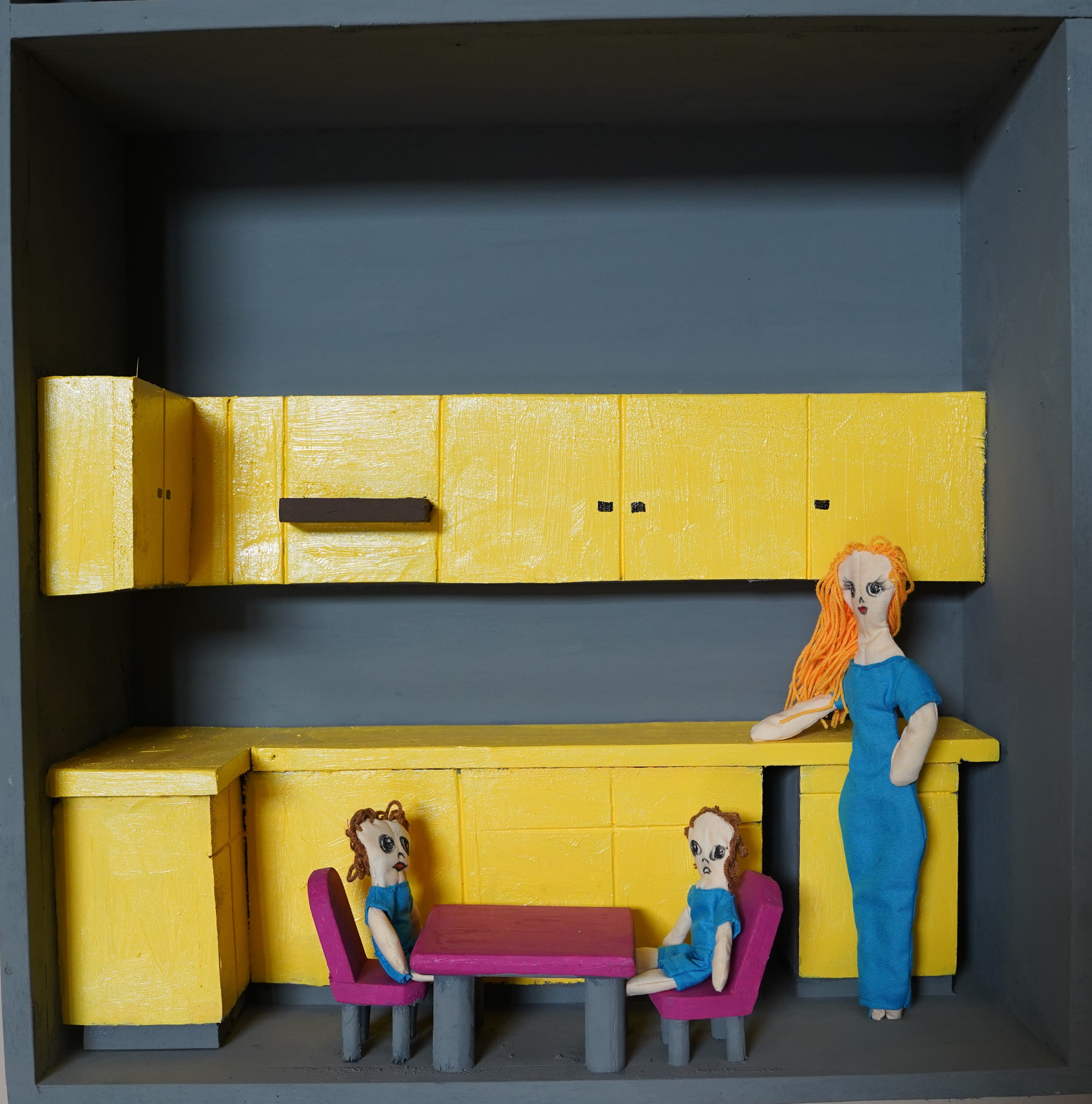
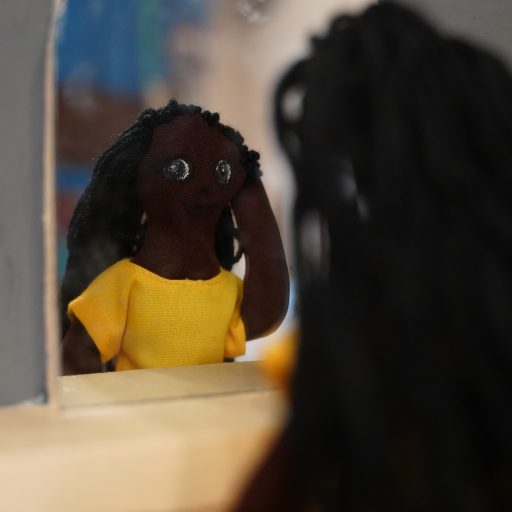
Reality television has become a cultural force precisely because it presents itself as “real.” But its narratives are carefully engineered by producers through editing and manipulation. Hours of raw life are distilled into archetypes—heroes, villains, underdogs—designed to heighten drama and sustain viewership.
Behind every episode lies an intricate system of control, editing, and manipulation engineered by producers who craft stories from raw human interaction. In this process, participants are stripped of complexity and recast as consumable characters for entertainment.
In many ways, my role as a Tale-weaver mirrors this invisible hand. In” The Family Portrait”, I engage with the family archive as a speculative realm, transforming relatives into sci-fi avatars built from fragments of memory, caricature, voice notes, costume, and imagination. Like a producer, I reconstruct the raw material of real life into storylines—distilling intimacy into archetypes, reframing the past through invention.
“ I now make the rules, I connect the cables and turn the lights on. It’s my show.”
Excerpts from Kezia Ouomoye’s Cogitations [8 /21/2025]
If the reality TV producer flattens people into consumable characters, my practice insists on the opposite: to restore multiplicity and allow for contradiction. The family archive becomes not only a spectacle but a constellation, where dolls, miniatures, and fragments each speak with layered voices across time. Rather than simplify, the work holds space for plurality—where many truths coexist within a single frame.
Post-Play Machines
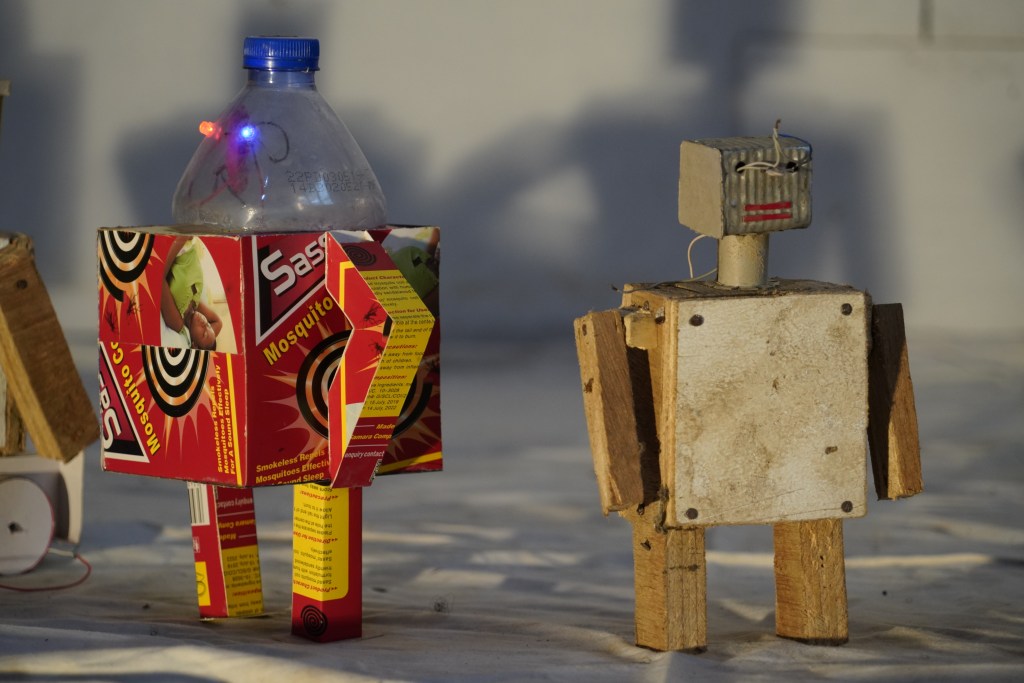
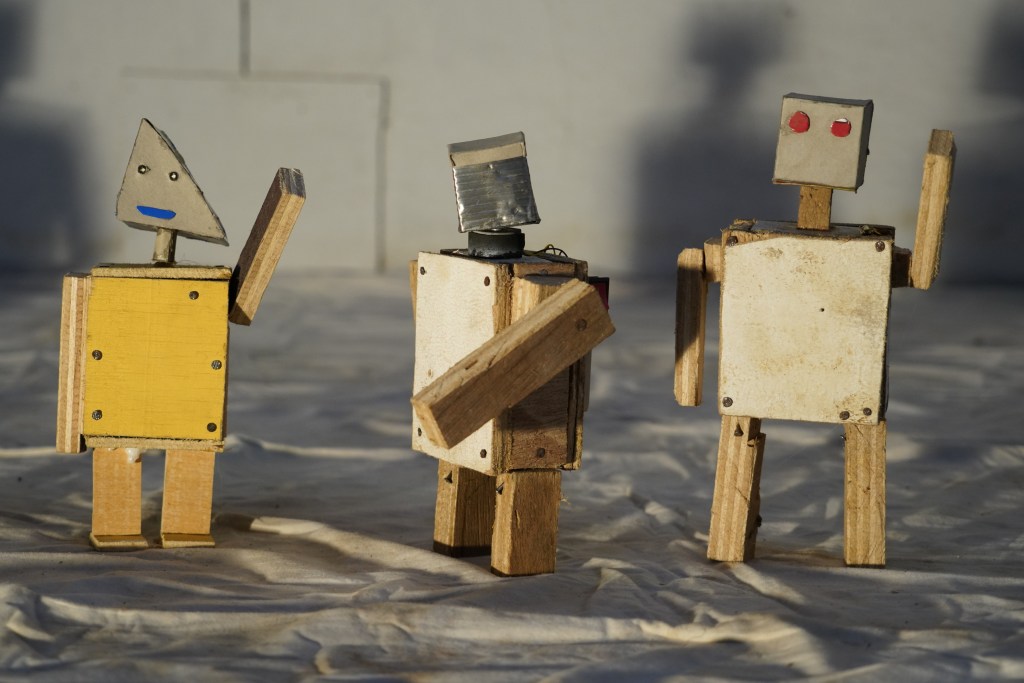
Post-Play Machines is a series of kinetic sculptures created from discarded wooden fragments, found objects, and simple electronic and lighting elements. Each figure — simultaneously creature, toy, wooden beings and machine — is constructed through an improvisational process that privileges intuition, experimentation, and play. Their bodies, made of salvaged wood and industrial remnants, are embedded with mechanisms that set certain limbs or heads in motion. Through these small, almost hesitant movements, they evoke questions of life, presence, and the blurred boundaries between human, object, and environment.
Post-Play Machines
Year
2019-2020
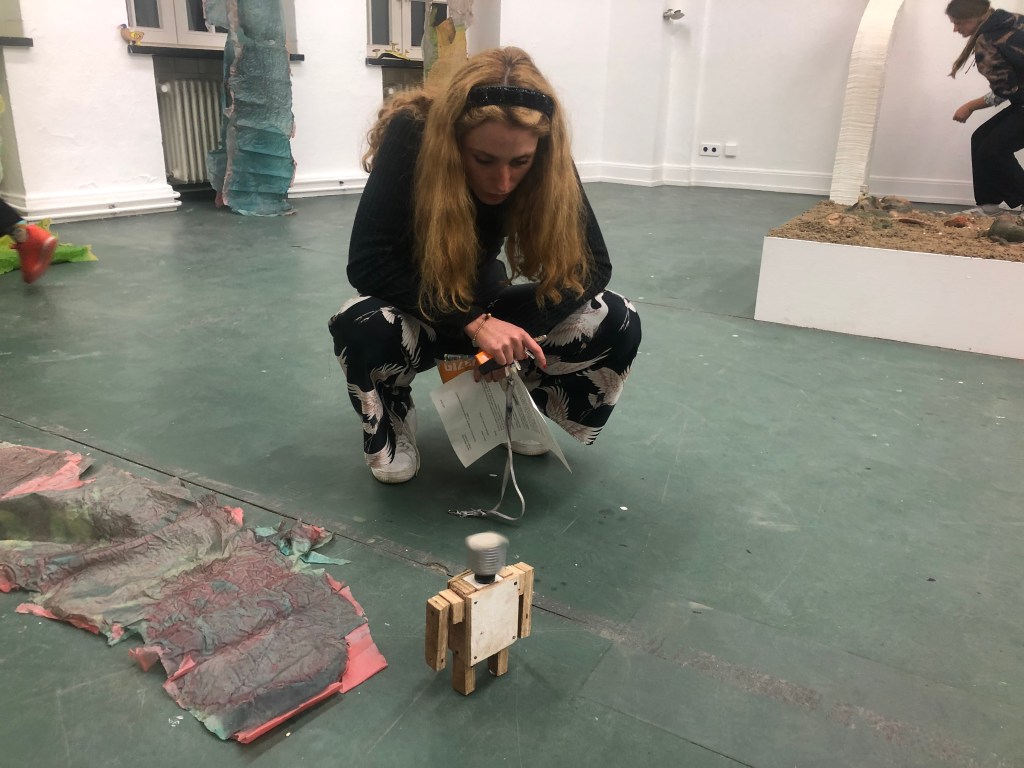

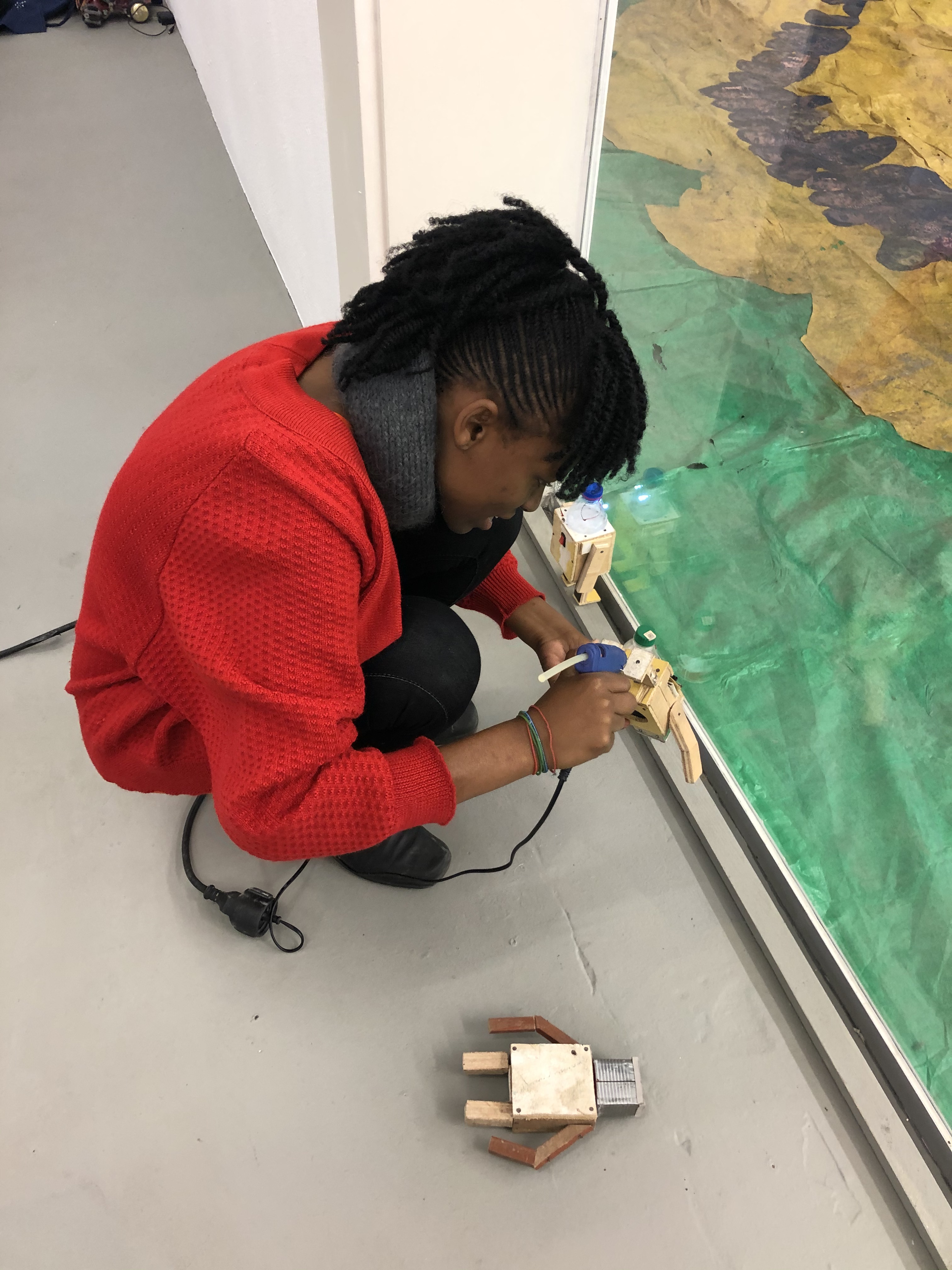
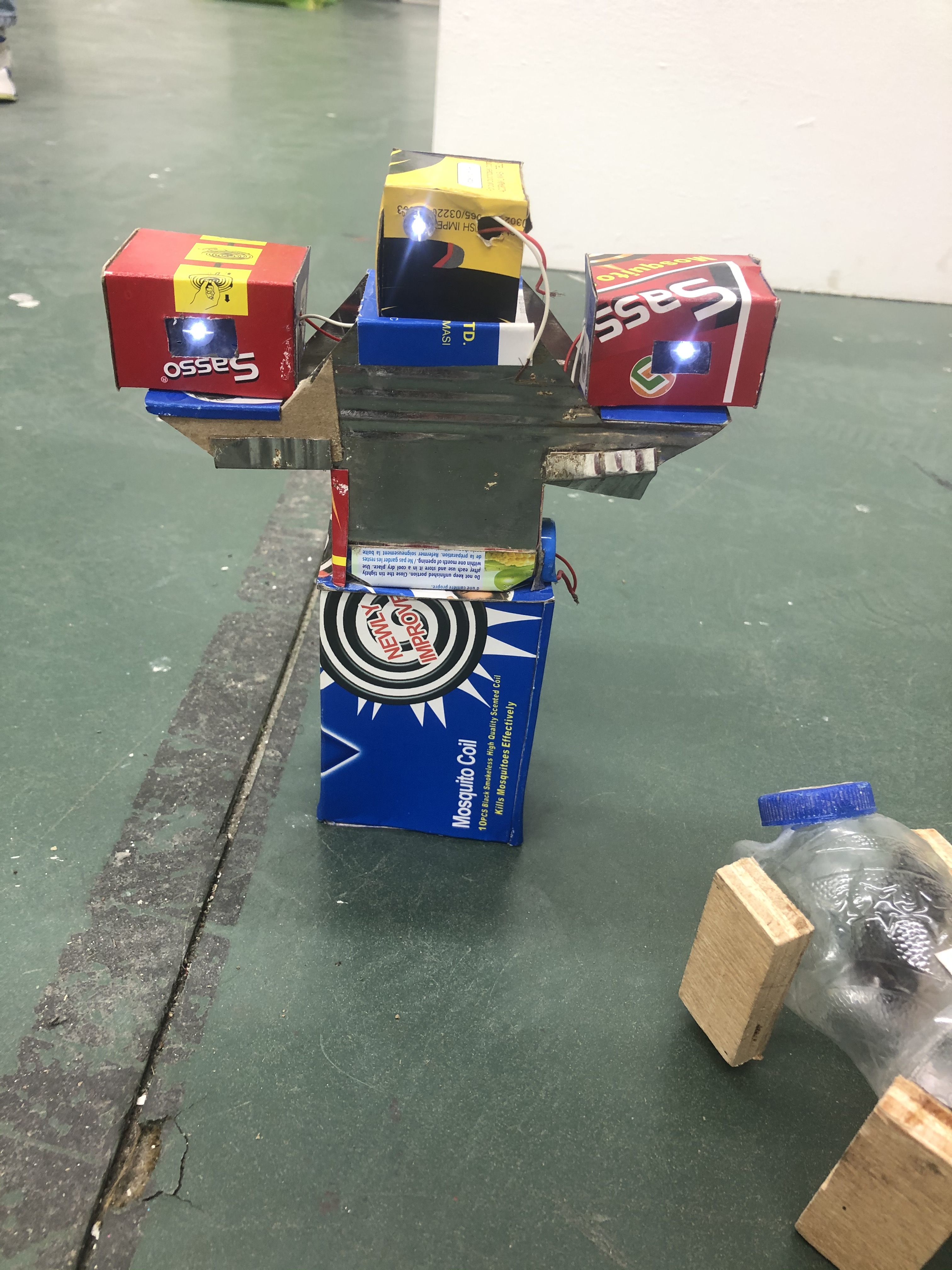
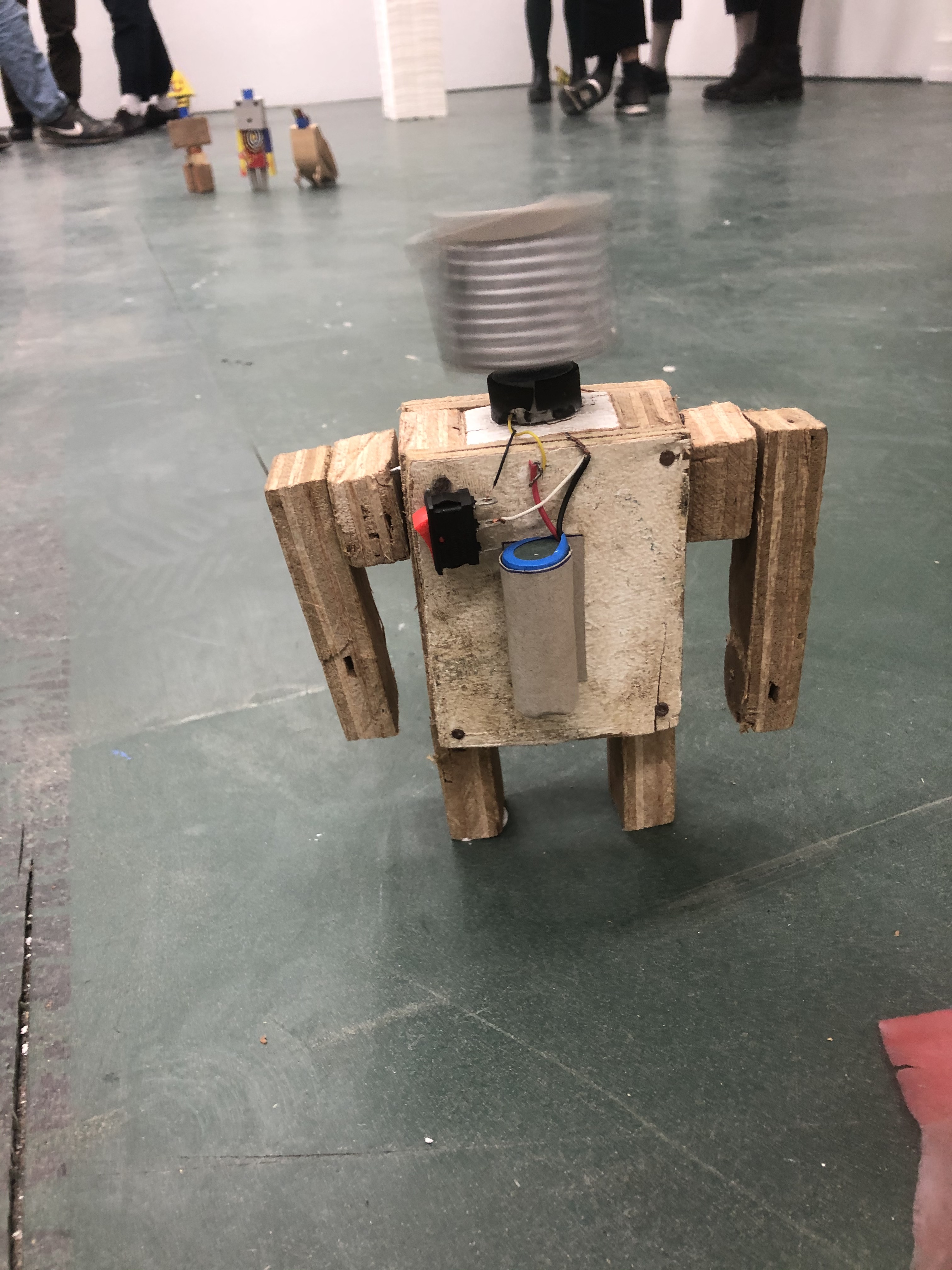
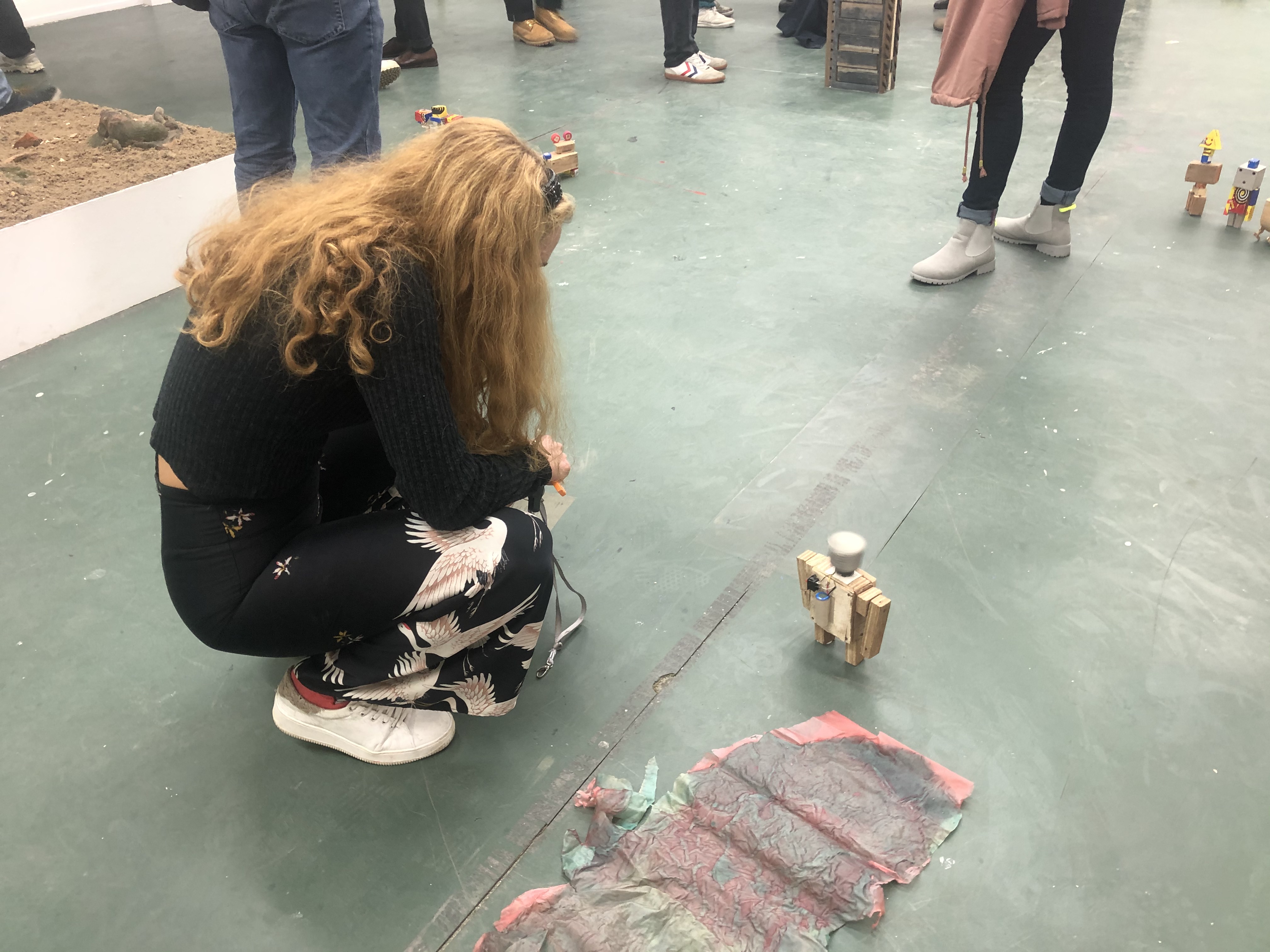
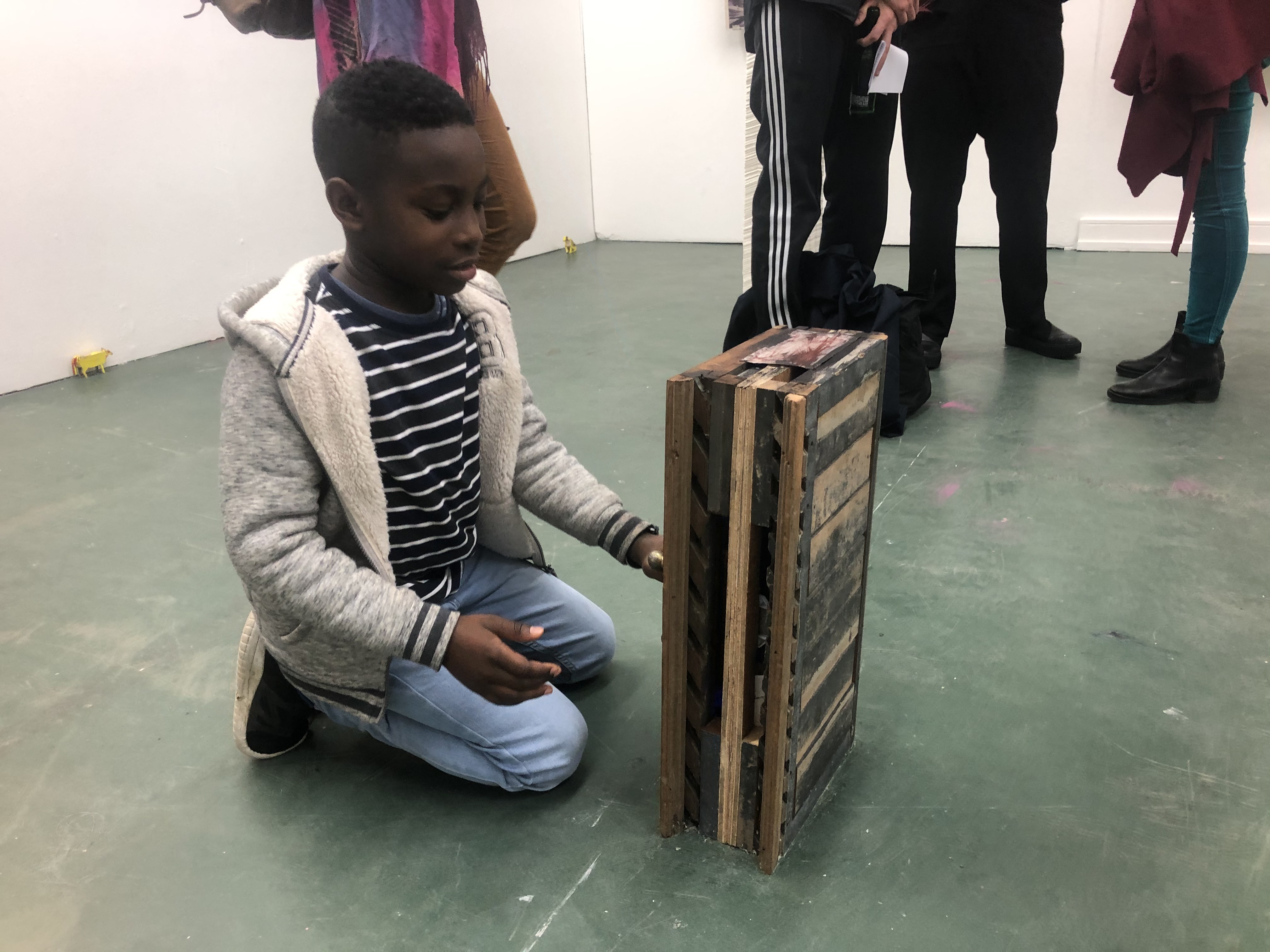
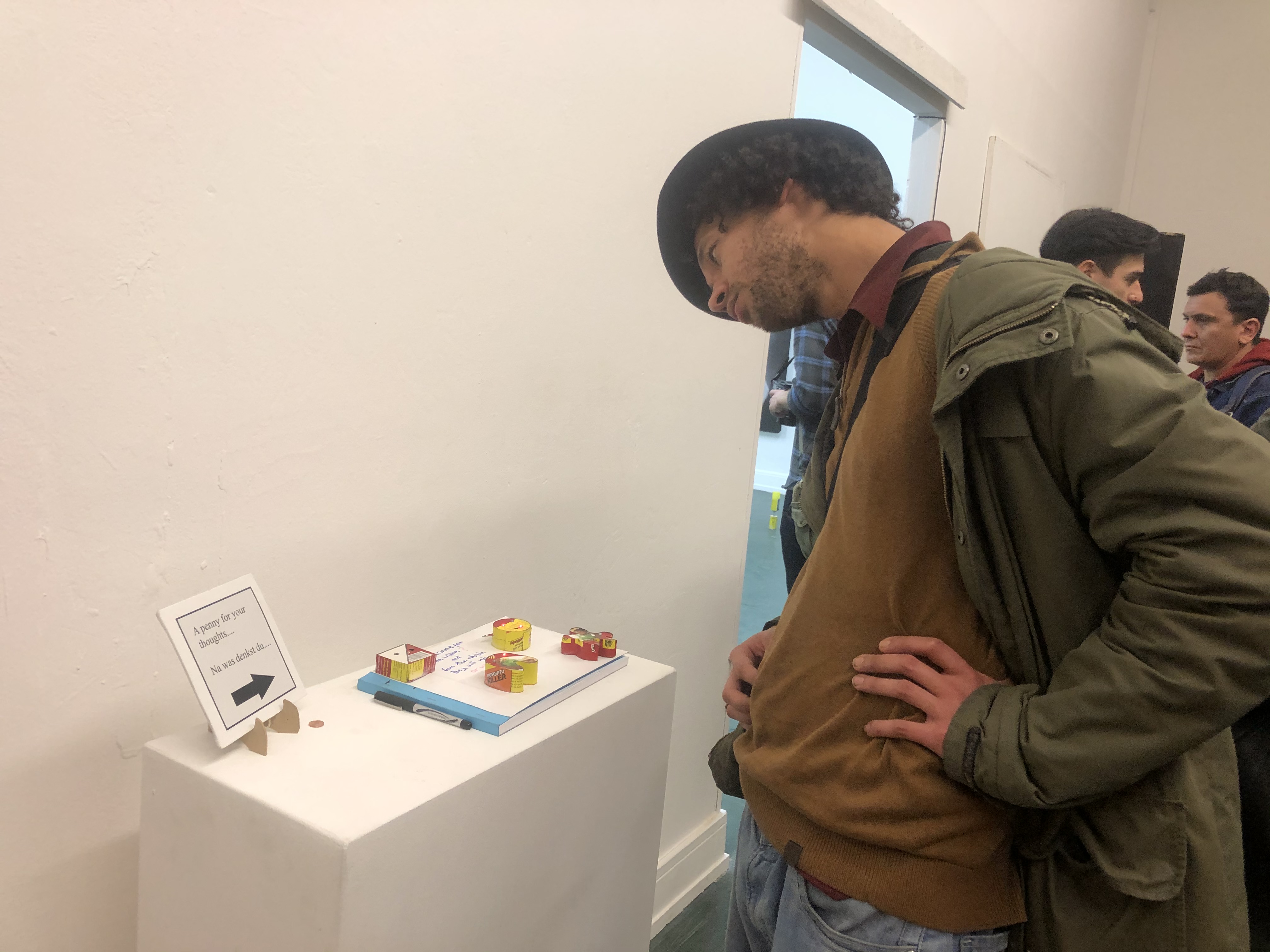
The work reimagines discarded materials as carriers of new vitality. By wiring fragments of the mundane into animated forms, I seek to activate narratives about waste and renewal. Each sculpture’s motion — however minimal — becomes a metaphor for ontological engagement. The light elements further amplify this sense of reanimation, producing shifting atmospheres that give the works both a mechanical and spiritual pulse.
Developed within a framework of sustainability and poetic invention, Post-Play Machines is a inquiry into storytelling through objects. My practice often engages assemblage and narrative construction as ways of revisiting archives — personal, cultural, and material. Here, movement functions as both literal and symbolic gesture: a reminder that even in stillness or neglect, there is potential for becoming.
The Fabric Cube (20211)
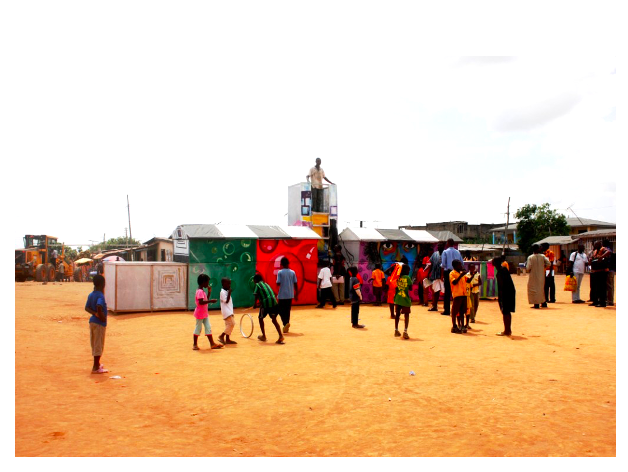
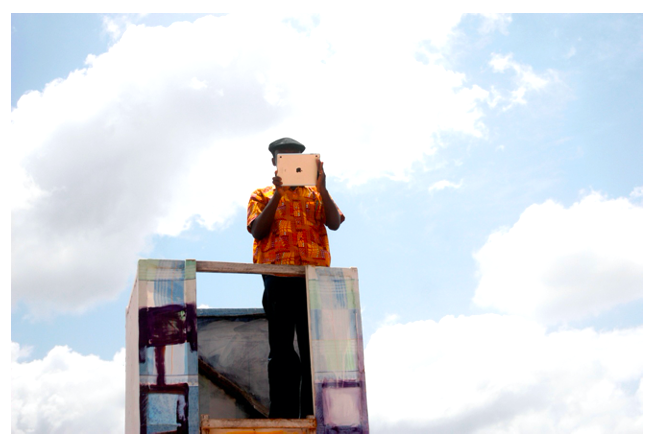
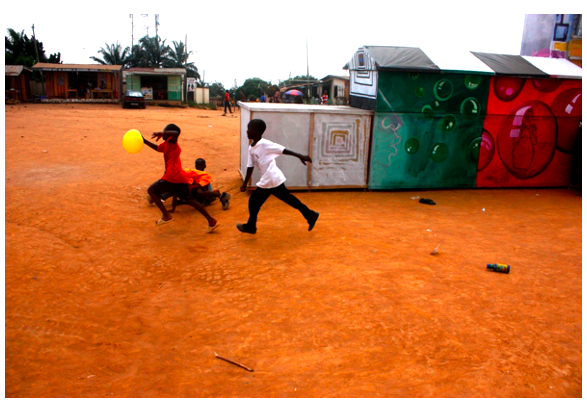
The Fabric Cube (2011) was conceived as both an artistic and curatorial intervention within a collective exhibition. The project explores how a rigid and exaggerated spatial structure might be experienced, navigated, and reinterpreted by an audience. At its core, the exhibition examines how objects and artworks are shaped by the spaces that contain them, and how those spaces in turn influence movement, perception, and imagination.
The central structure appropriates the logic of a traditional painting—canvas stretched over a wooden frame—and expands it into a monumental architectural form. Quilted fabric collected from second-hand bed sheets was stitched together and stretched across a wooden structure, transforming the language of painting into inhabitable space. The use of quilting references domestic labour historically associated with women, particularly enslaved women who pieced together worn cloth and discarded fabrics out of necessity. Their needlework often carried quiet yet powerful expressions of resistance, embedding histories of endurance and survival within the material itself.
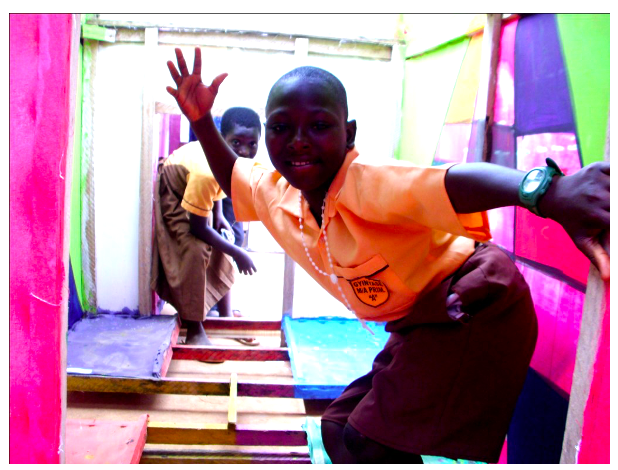
The interior of the structure is composed of exaggerated, compact cells that echo systems of spatial control. These confined compartments contrast with the open environment surrounding the installation, prompting visitors to consider how architecture can regulate movement and perception. Yet within such restrictive environments, imagination persists. Even when bodies are constrained, the mind retains the capacity to invent, wander, and construct alternative spaces of freedom.
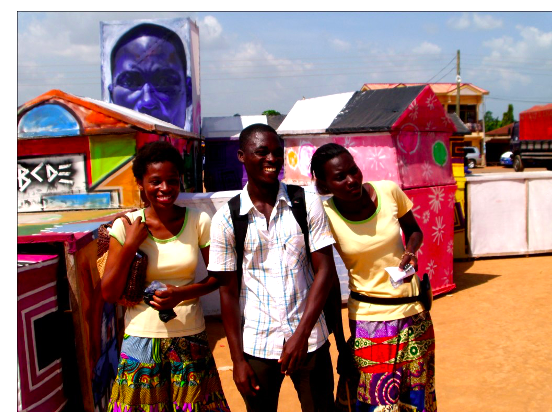
The exhibition also challenges conventional notions of authorship within the exhibition format. Works by Afimaa Amiteye and Kusi Agyemang were selected to extend and complicate the central argument. Afimaa’s research interrogates the spatial logic of the slum—an environment often perceived as irregular, improvised, and fluid. Her work raises the question of how such spatial informality might inhabit or disrupt a rigid exhibition structure. Kusi’s work explores the self and the imaginative capacities of the mind, suggesting that even within controlled environments, the inner world remains expansive and generative.
By bringing these positions together, The Fabric Cube creates a layered environment where rigidity and flexibility coexist. The structure becomes a site where architecture, bodies, and artworks interact, blurring individual authorship and encouraging collective spatial experience. Animation, text, portraiture, and materials sourced from the surrounding environment merge within the installation, forming a collage of ideas, techniques, and visual languages.
The Fabric Cube reflects on how spaces—whether institutional, architectural, or social—shape behaviour and perception. At the same time, it asks whether these systems might be subtly reworked from within. The project navigates a tension between adhering to established exhibition conventions and quietly unsettling them, proposing that even the most structured environments can give rise to unexpected forms of imagination and freedom.
 keziaouomoye.com